Wise Men and the Light
by Peggy Colf, Executive Assistant | 01/04/2026 | This Sunday's ReadingToday we celebrate The Epiphany of Our Lord, and it is a feast that celebrates Jesus being made known to the world. It remembers the visit of the magi, also called wise men, who traveled from far away to find the newborn King. They followed a star that led them to Jesus. This story reminds us that Jesus came for all people. The magi were not Jewish, but they were still welcomed. They brought gifts and knelt before Jesus. This shows that anyone who seeks the truth can come to Him.
The Bible tells us about wise men or magi from the East who traveled to visit Jesus in Bethlehem and bring Him three gifts. However, some of the details we celebrate as tradition are exactly that, traditions we have accepted over time, even though they are not found in Scripture. The biblical account of the visit of the wise men to the child Jesus is found in the Gospel of Matthew. Sometimes I wonder who they were and where did they come from.
They were wise men, or magi, from the East. At the time, the term magi was used to describe learned men who studied astrology and astronomy, and who were interested in philosophy, dreams, and any knowledge that could broaden their understanding. The Eastern lands in that period correspond to what we now know as Iraq, Yemen, Iran, and Saudi Arabia.
They brought three gifts with prophetic meaning for the life of Jesus:
Gold - Recognition of His kingship: Jesus, the King of Kings.
Frankincense - A blend of resins used in acts of worship, symbolizing that Jesus is worthy of our praise and adoration.
Myrrh - An ointment used for burial at the time, representing the suffering and death Jesus would endure.
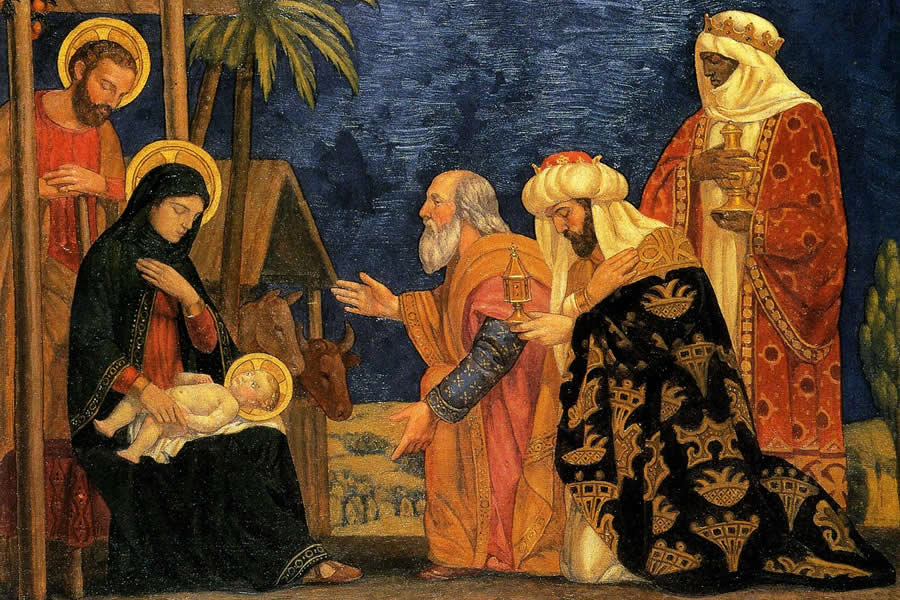
In most of the pictures that we see of the Epiphany the Wise Men are standing around the manger with Jesus as a baby but in reality, more than a year had passed since Jesus' birth. The wise men did not go directly to Bethlehem; they first went to Jerusalem and spoke with King Herod. From their conversation with King Herod, we know that some time had passed between the moment they first saw the star and the day they arrived at the palace to speak with him. People sometimes wondered why they followed the star.
They were well-versed in astrology, and seeing a very bright and unusual star, they recognized its significance, it signaled the birth of a new king for Israel. So, they decided to go and worship Him. However, they went to Jerusalem, the capital, assuming they would find the new king there. It is amazing the faith that they had because after speaking with Herod, the star that had first announced Jesus' birth and inspired their journey appeared to them again.
They followed it, and it led them to Bethlehem to the exact place where the child Jesus was. The child was not in a manger but in a house, and that day He was with His mother, Mary. Likely, between one and two years had passed since Jesus' birth, and the family had already settled into a home. When the Wise Men arrived at the house, they immediately worshiped Jesus, they had no trouble recognizing who He was: the King. The Bible does not tell us the names of the wise men or how many there were in total. By tradition and because they brought three gifts, popular belief is that there were three wise men.
They have been given the names Melchior, Gaspar, and Balthazar, but this is not a biblical fact. We can learn a lot from the Wise Men. They studied, stayed alert and recognized the signs that were there for them. We should have that same passion to read the scriptures and to watch for signs in our own times. They recognized Jesus and worshiped Him; we need to not only notice God's work in our own lives and worship Him with our whole heart and our whole mind but to thank Him for what He has done for us. They took a long journey just to see and know Jesus. I am not sure very many of us would sacrifice our comfort and security to do the same because we sometimes value material possessions over our relationship with God. (PC)
Los Reyes Magos y la Luz
Hoy celebramos la Epifanía del Señor, una fiesta que conmemora la manifestación de Jesús al mundo. Recuerda la visita de los magos, también llamados Reyes Magos, que viajaron desde tierras lejanas para encontrar al Rey recién nacido. Siguieron una estrella que los guió hasta Jesús. Esta historia nos recuerda que Jesús vino para todas las personas. Los magos no eran judíos, pero aun así fueron bienvenidos. Le trajeron regalos y se arrodillaron ante Jesús. Esto demuestra que cualquiera que busque la verdad puede acercarse a Él.
La Biblia nos habla de unos sabios o magos de Oriente que viajaron para visitar a Jesús en Belén y le trajeron tres regalos. Sin embargo, algunos de los detalles que celebramos como tradición son precisamente eso, tradiciones que hemos aceptado con el tiempo, aunque no se encuentren en las Escrituras. El relato bíblico de la visita de los Reyes Magos al niño Jesús se encuentra en el Evangelio de Mateo. A veces me pregunto quiénes eran y de dónde venían.
Eran sabios, o magos, de Oriente. En aquella época, el término magos se usaba para describir a hombres eruditos que estudiaban astrología y astronomía, y que estaban interesados en la filosofía, los sueños y cualquier conocimiento que pudiera ampliar su comprensión. Las tierras orientales de aquel período corresponden a lo que hoy conocemos como Irak, Yemen, Irán y Arabia Saudita.
Trajeron tres regalos con un significado profético para la vida de Jesús:
Oro: Reconocimiento de su realeza: Jesús, el Rey de Reyes.
Incienso: Una mezcla de resinas utilizada en actos de culto, que simboliza que Jesús es digno de nuestra alabanza y adoración.
Mirra: Un ungüento que se usaba para los entierros en aquella época, que representa el sufrimiento y la muerte que Jesús padecería.
En la mayoría de las imágenes que vemos de la Epifanía, los Reyes Magos están de pie alrededor del pesebre con Jesús como un bebé, pero en realidad, había pasado más de un año desde el nacimiento de Jesús. Los Reyes Magos no fueron directamente a Belén; primero fueron a Jerusalén y hablaron con el rey Herodes. Por su conversación con el rey Herodes, sabemos que había pasado algún tiempo entre el momento en que vieron la estrella por primera vez y el día en que llegaron al palacio para hablar con él. La gente a veces se pregunta por qué siguieron la estrella.
Eran expertos en astrología, y al ver una estrella muy brillante e inusual, reconocieron su significado: anunciaba el nacimiento de un nuevo rey para Israel. Decidieron ir a adorarlo. Sin embargo, fueron a Jerusalén, la capital, suponiendo que encontrarían allí al nuevo rey. Es asombrosa la fe que tenían, porque después de hablar con Herodes, la estrella que había anunciado el nacimiento de Jesús e inspirado su viaje se les apareció de nuevo.
La siguieron y los guió hasta Belén, al lugar exacto donde se encontraba el niño Jesús. El niño no estaba en un pesebre, sino en una casa, y ese día estaba con su madre, María. Probablemente habían pasado entre uno y dos años desde el nacimiento de Jesús, y la familia ya se había instalado en una casa. Cuando los Reyes Magos llegaron a la casa, adoraron inmediatamente a Jesús; no tuvieron ninguna duda en reconocer quién era: el Rey. La Biblia no nos dice los nombres de los Reyes Magos ni cuántos eran en total. Por tradición y porque trajeron tres regalos, la creencia popular es que eran tres.
Se les han dado los nombres de Melchor, Gaspar y Baltasar, pero esto no es un dato bíblico. Podemos aprender mucho de los Reyes Magos. Estudiaron, se mantuvieron alerta y reconocieron las señales que se les presentaban. Deberíamos tener la misma pasión por leer las Escrituras y estar atentos a las señales en nuestros propios tiempos. Reconocieron a Jesús y lo adoraron; nosotros no solo necesitamos reconocer la obra de Dios en nuestras vidas y adorarlo con todo nuestro corazón y toda nuestra mente, sino también agradecerle por lo que ha hecho por nosotros. Emprendieron un largo viaje solo para ver y conocer a Jesús. No estoy seguro de que muchos de nosotros sacrificaríamos nuestra comodidad y seguridad para hacer lo mismo, porque a veces valoramos más las posesiones materiales que nuestra relación con Dios. (PC)
BACK TO LIST